
Google I/O 2026 focused heavily on AI across Search, Gemini, Workspace, developer infrastructure, creative tools, and new hardware. The biggest theme was simple: AI is moving from a chat feature to a system that can search, organize, create, compare, and take actions across apps and devices.
Google I/O 2026 has sparked a lot of excitement across various tech platforms.
This roundup covers the most important Google I/O 2026 announcements, what each product does, who it is for, and which updates are rolling out now versus later this year.
At Google I/O 2026, attendees experienced the latest innovations firsthand.
The big picture from Google I/O 2026
Google said it now has 13 products with more than 1 billion users each, and the 2026 event used that scale to show a broad AI strategy rather than one single product launch.
This broad user base was evident at Google I/O 2026, showcasing AI in action.
The most important shifts were:
-
- Search becomes more agentic, with smarter query formulation, follow-up flows, background information tracking, and generative interfaces.
- Gemini becomes more task-oriented, with new agents, voice features, app integrations, and a redesigned experience.
- Workspace gets more hands-free creation tools, especially in Docs and image editing.
Google I/O 2026 demonstrated how Workspace’s new tools enhance productivity.
- Developers get faster infrastructure and more capable models, including Gemini 3.5 Flash and new TPU hardware.
- XR and wearable AI move closer to consumer products, led by audio glasses and Android XR demos.
What was announced for Google Search
During Google I/O 2026, significant updates to Search were revealed.
New intelligent Search box
Google introduced a redesigned search box that uses AI-powered suggestions to help shape a better query before you submit it. This goes beyond standard autocomplete by adding nuance and detail you may not have thought to include.
This redesign aligns with trends showcased at Google I/O 2026.
For example, instead of a short search like a request for a family-friendly weekend activity, the system can help expand that into a more specific question with constraints such as budget, age suitability, or location.
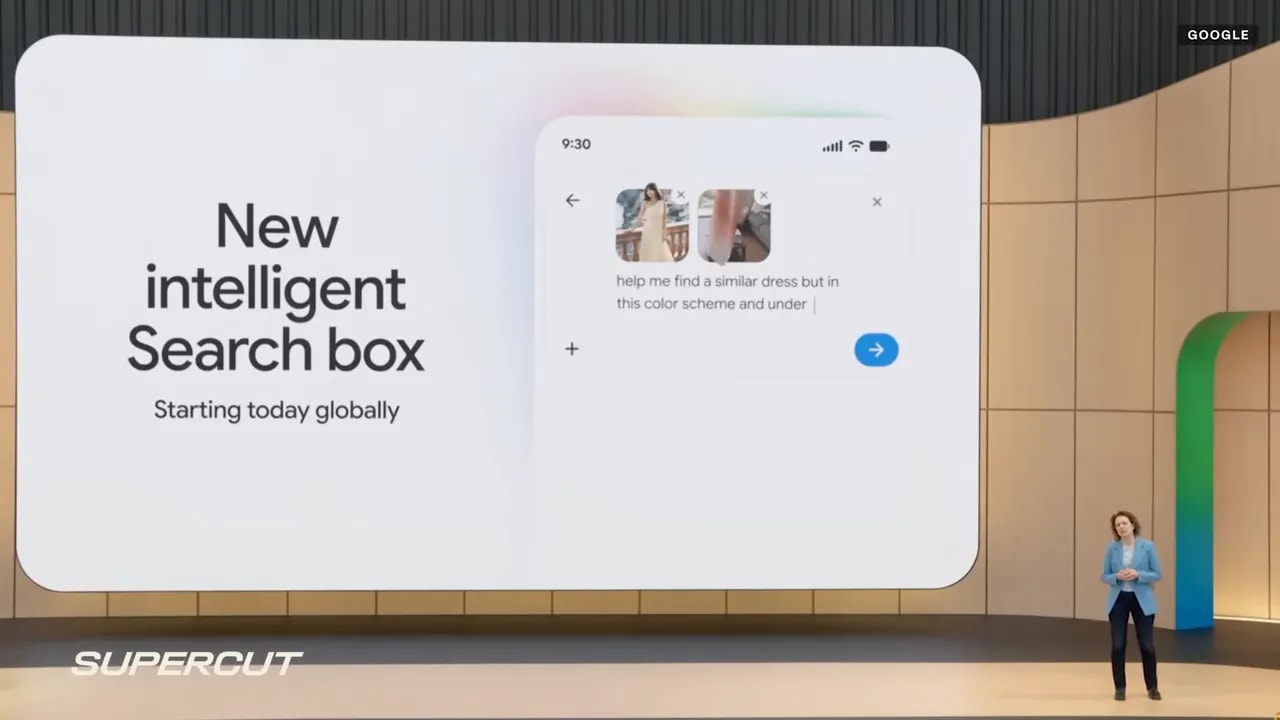
Google called this the biggest change to the search box in more than 25 years, and said it is starting to roll out globally.
A seamless AI search experience
Google is blending AI Overviews and AI Mode into one continuous search flow on the main results page. The goal is to let people move from a traditional search result to deeper follow-up questions without switching mental context.
That new AI search experience is live worldwide on desktop and mobile.
Information agents in Search
Google I/O 2026 emphasized the proactive nature of these search agents.
Search is also becoming more proactive. Google said users will be able to set information agents to work in the background 24/7 so Search can keep track of updates on specific topics and notify you when something important changes.
This feature is expected this summer.
Generative UI in Search
Generative UI was a highlight of Google I/O 2026, changing user interaction.
One of the more ambitious changes is generative UI inside Search. Google said Search will be able to build the ideal format for a question, including:
- Dynamic layouts
- Interactive widgets
- Custom result experiences
This is powered by anti-gravity and Gemini 3.5 Flash capabilities being brought into Search. Google said generative UI in Search will roll out this summer and be free.
What changed in Google Maps and YouTube
Google Maps also saw innovations presented at Google I/O 2026.
Ask Maps
Maps received what Google described as its biggest upgrade in a decade, including a new feature called Ask Maps.
The idea is that Maps can handle more natural, real-world questions, including urgent situations with multiple constraints. Rather than searching only by category or place name, you can ask for help that combines timing, location, and shopping intent in one request.
This upgrade was one of the standout features at Google I/O 2026.
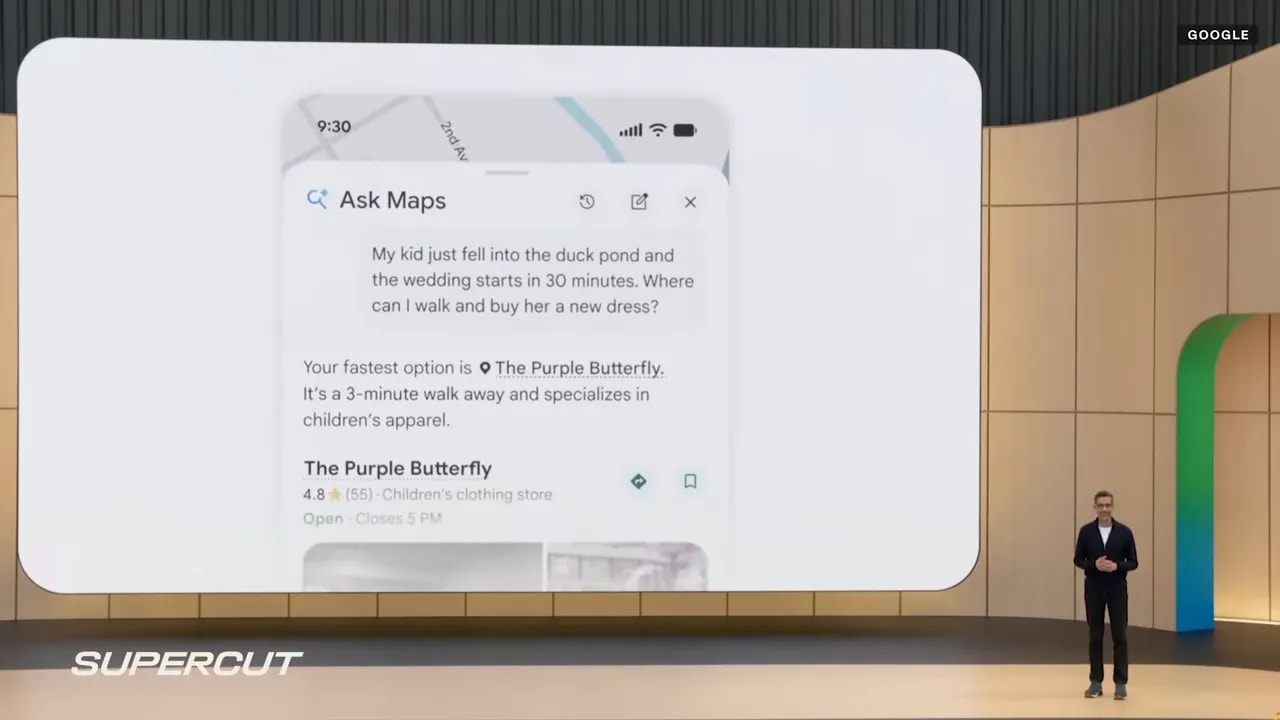
This suggests a broader shift in Maps from navigation-only behavior to contextual local problem solving.
Ask YouTube
Ask YouTube was another key feature discussed at Google I/O 2026.
Google also introduced Ask YouTube, which reworks how people search for instructional and comparison content on YouTube.
Instead of returning only a list of matching videos, it can surface structured results and support follow-up questions. Google showed an example around teaching a young child to ride a pedal bike after using a balance bike, then following up with a comparison question about hand brakes versus pedal brakes.
In that example, the results could even be laid out in a table for easier comparison.
This functionality will enhance user experience, as showcased at Google I/O 2026.

Google said Ask YouTube will roll out broadly in the US this summer.
New Gemini features announced at Google I/O 2026
Google I/O 2026 highlighted the capabilities of Gemini Omni.
Gemini Omni and Gemini Omni Flash
Google announced Gemini Omni, a model family designed to create from any input. It combines Gemini reasoning with Google’s generative media systems.
The first model in the family is Gemini Omni Flash, which Google said is now available across its products. It can generate media from prompts and also transform existing media, including changing the style or details of a scene.
Google highlighted two key use cases:
These use cases were demonstrated during Google I/O 2026.
- Educational generation, such as turning a topic like protein folding into animated visual explanations.
- Reality transformation, where your own video can be remixed into a different visual world or style.

Gemini 3.5 Flash
Gemini 3.5 Flash was a focal point at Google I/O 2026.
Google also introduced Gemini 3.5 Flash for developers. The key message was speed and agentic performance.
In a demo using anti-gravity, Google showed the model coordinating a highly complex coding task with many sub-agents in parallel. According to the announcement, the system:
- Worked for 12 hours
- Used 93 sub-agents
- Made more than 15,000 model requests
- Processed 2.6 billion tokens
The end result was a functioning operating system core that then needed additional fixes such as video and keyboard driver support.
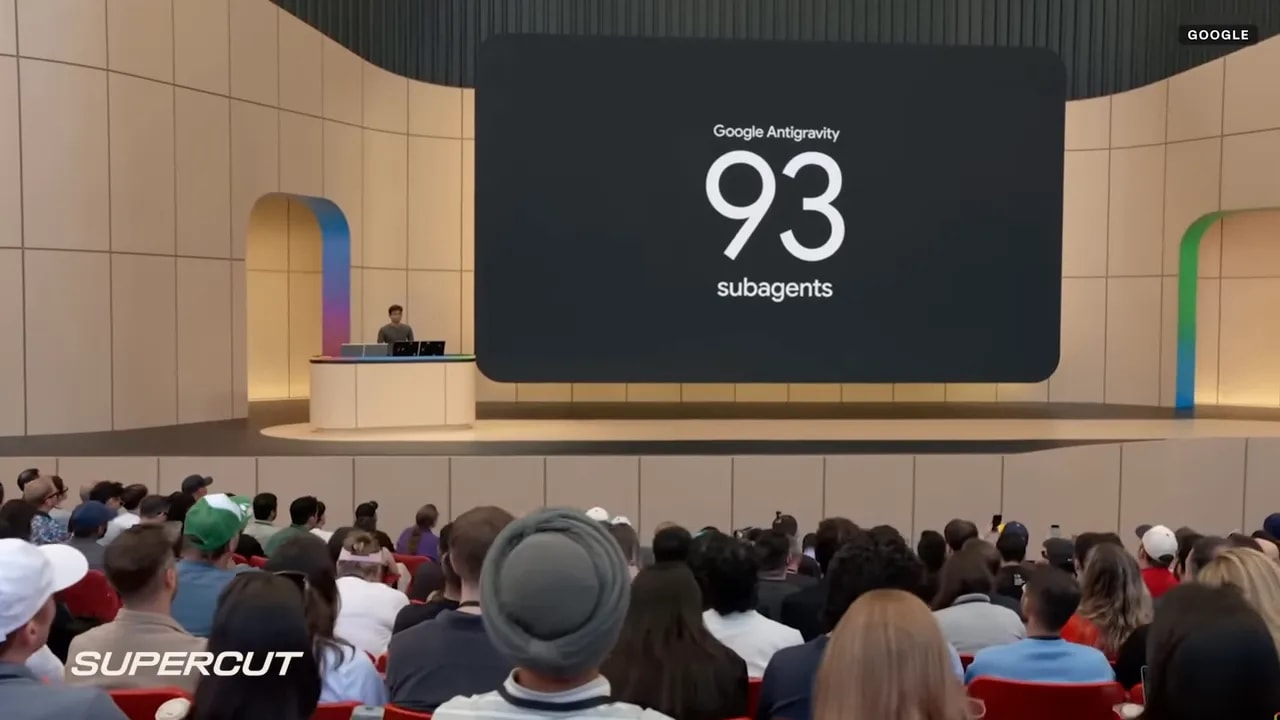
Google also positioned anti-gravity 2.0 as a globally available tool.
Gemini Spark
Google I/O 2026 showcased how Gemini Spark can streamline workflows.
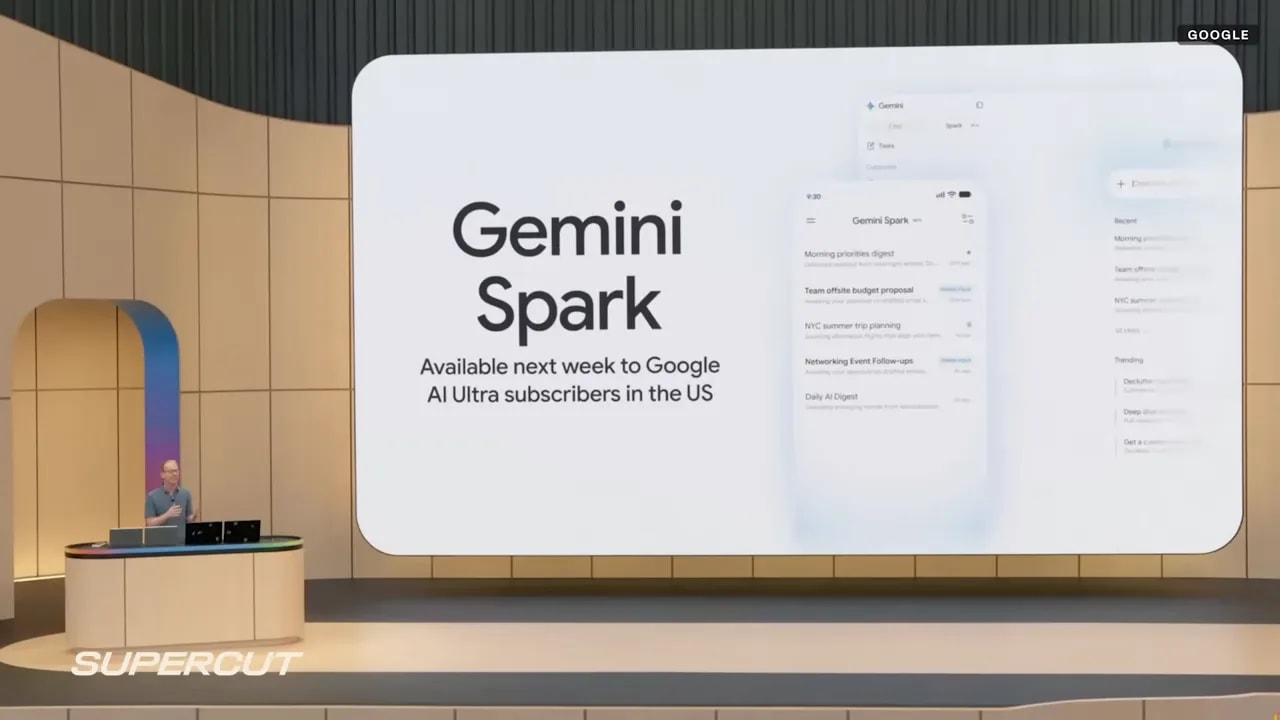
Gemini Spark was one of the most important productivity announcements. Google described it as a personal AI agent that helps navigate your digital life and take actions on your behalf under your direction.
It runs on dedicated virtual machines in Google Cloud and is designed to continue working in the background even after you close your laptop.
Google showed Spark breaking down complex tasks step by step, working across apps and generating outputs such as files. One example was a live RSVP tracker created in Google Sheets.
Other important Gemini Spark details:
-
- Tasks sync across devices
The synergy across devices was emphasized during Google I/O 2026.
- Support was shown across Android and iPhone
- Chrome integration is planned for later this summer
- A phone-based agent home base called Android Halo is coming later this year
Initial rollout is limited. Google said Spark is first going to trusted testers, then as a beta for US Google AI Ultra subscribers.
Gemini app redesign and Daily Brief
Google said it has redesigned the Gemini experience from the ground up with a new visual language called Neural Expressive. Changes include:
-
- Fluid animations
This was another highlight from Google I/O 2026.
- More vibrant colors
- New typography
- Haptic feedback in the app
- Built-in templates for creating images, video, and music

Google also said Gemini Live now opens immediately and inline, and that regional dialect options are coming soon.
Another Gemini addition is Daily Brief, a personalized morning digest that pulls together the most important information from inbox, calendar, and tasks.
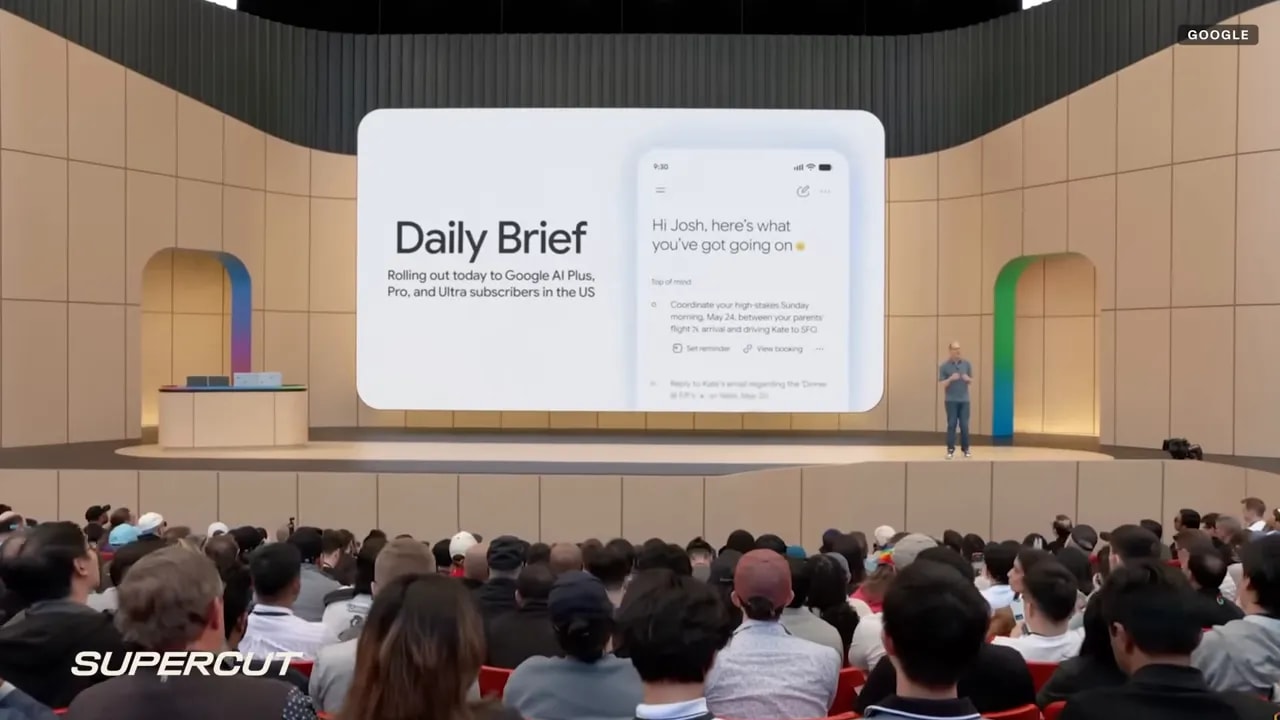
Daily Brief is rolling out in the US for Google AI Pro and Ultra subscribers.
Google AI Pro and Ultra subscribers will benefit from features announced at Google I/O 2026.
Workspace announcements: Docs Live and Google Pics
Docs Live
Docs Live brings voice-first drafting into Google Docs. The main idea is that you can speak naturally, dump your thoughts, and let Gemini turn that into a document draft.
Google showed the system doing more than simple transcription. It could:
- Capture rough ideas for a talk
- Shape those ideas into talking points
- Add creative framing, such as more engaging analogies
- Pull logistical details from email and place them at the top of the document
- Turn the updated requirements into a draft
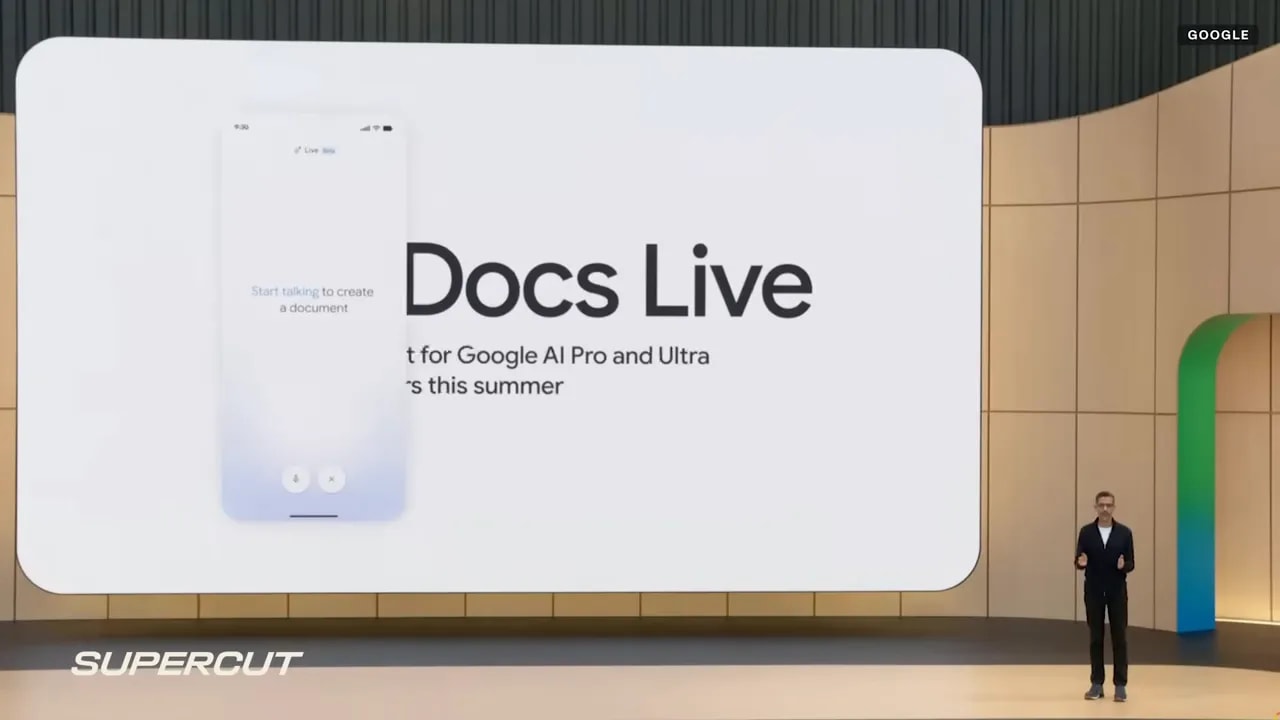
Docs Live is expected this summer for Pro and Ultra subscribers, and the same voice capabilities are also coming to Gmail and Google Keep.
Google Pics
Google introduced Google Pics as a new Workspace image creation and editing tool for making items like party flyers and infographics with more creative control.
Key capabilities announced include:
- Starting from a base image as a canvas
- Understanding the elements inside the composition
- Removing an element by hovering and clicking
- Resizing an object to fit the frame
- Adding or editing text
- Translating text in a few clicks
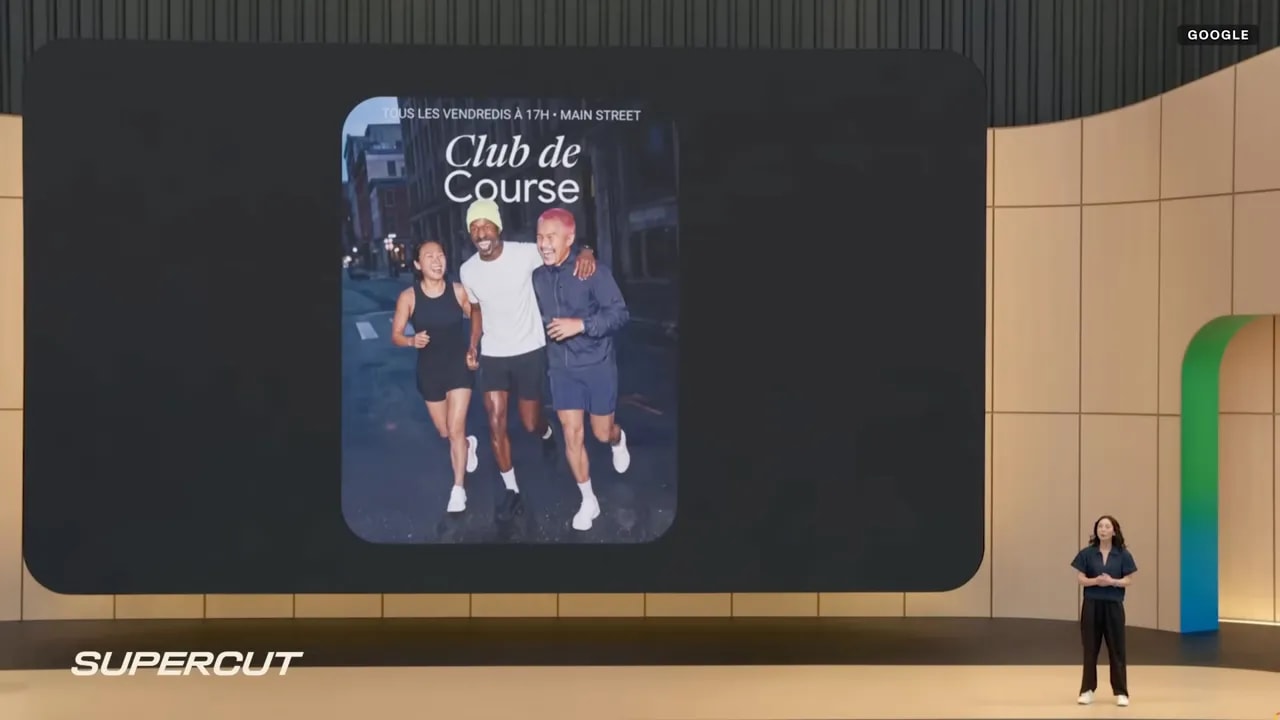
Google said Pics is rolling out this summer.
Creative tools: Flow and Flow Music
Google Flow
Google updated Flow so an agent can now take multiple actions at once instead of handling a single prompt at a time.
One example involved asking the agent to find the best camera angles for a scene. It analyzed the image and generated multiple video variations from one source image.
Google said a single image could be turned into 16 unique videos.
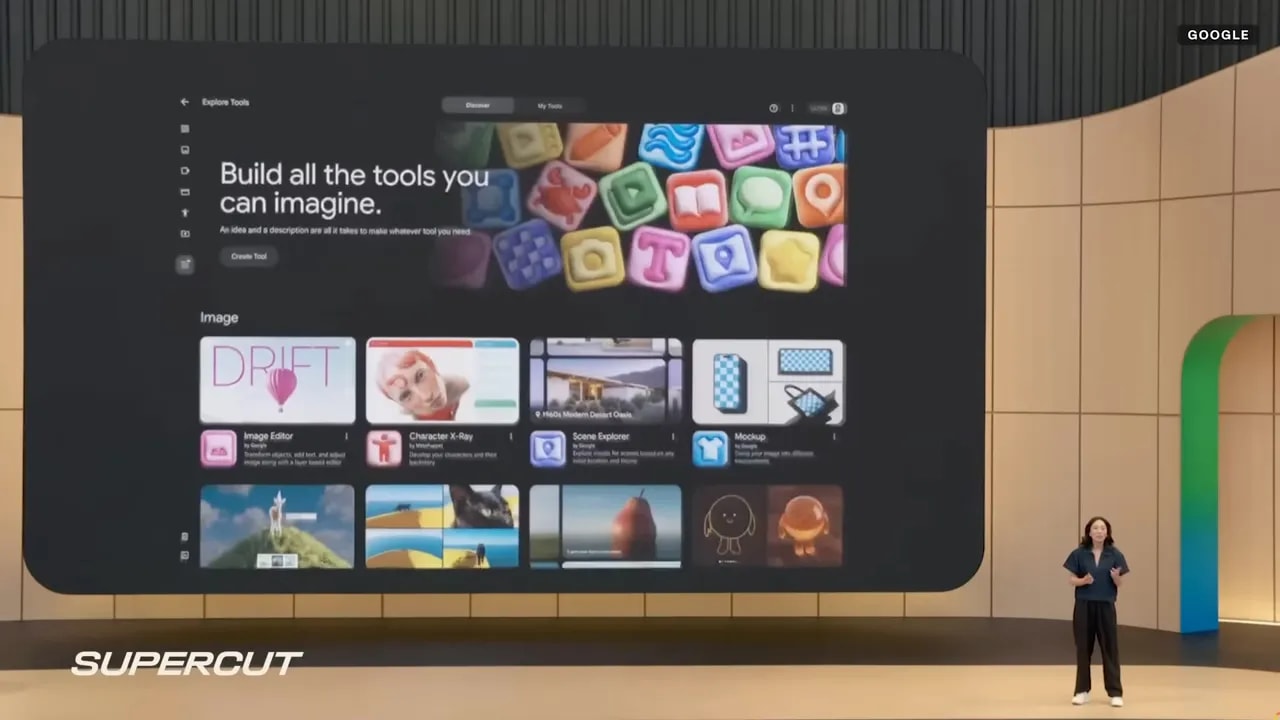
Another notable addition is the ability to create and remix your own custom creative tools inside Flow, including effects, text layering, and hand-drawn style workflows.
Google Flow Music
Google Flow Music extends that same creative control to song creation. Google showed an example where a piano riff was recorded into the system and then guided toward an R&B direction to help shape what the final track could become.
Google emphasized that these tools can help artists explore ideas and make creative decisions faster, even if the generated output is not the final finished song.
Google said the new Flow and Flow Music features are available now.
Developer and infrastructure announcements
Eighth-generation TPUs
Google said it recently announced its eighth-generation TPUs at Cloud Next.
Two chips were highlighted:
The advancements were a key discussion point at Google I/O 2026.
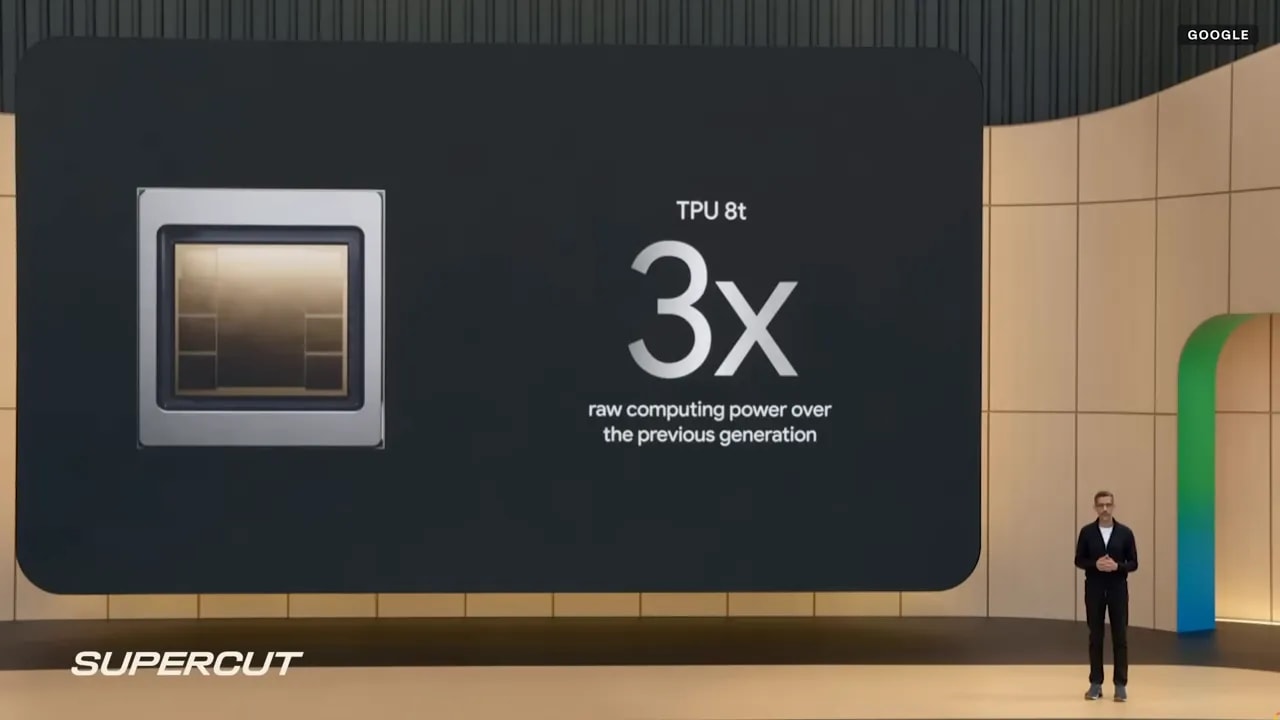
- TPU 8t, optimized for large-scale pre-training
- TPU 8i, designed for inference
Google said TPU 8t delivers nearly three times the raw computing power of the previous generation.
Google also said it can now distribute training across multiple sites and scale across more than 1 million TPUs globally.
Faster inference
For inference, Google said TPU 8i improves speed at every step. A demo on an upcoming Flash model showed code generation at nearly 1,500 tokens per second, with a quick example generating a Chrome Dino-style game.
This fast-paced innovation was also highlighted during Google I/O 2026.
That matters because it points to faster AI responses not only in research settings but also in products and developer tools.
Shopping and commerce announcements
Universal Cart
Google announced a Universal Cart that works across merchants and services. The concept is that adding an item to your cart in one Google context should carry over to others.
This concept aligns with the vision presented at Google I/O 2026.
Google said this can work while browsing in:
- Search
- Gemini
- YouTube
- Gmail
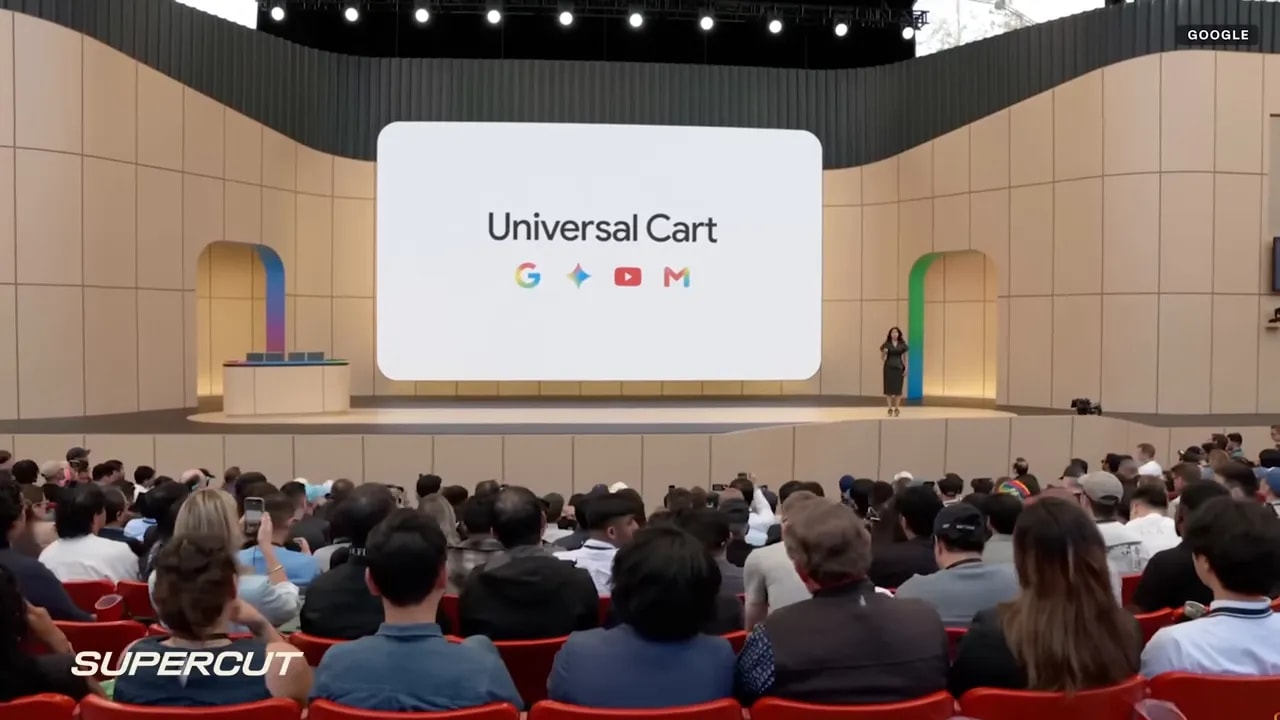
Once a product is added, the cart can continue working in the background. Rollout starts in the US this summer across Search and the Gemini app, with YouTube and Gmail coming later.
Wearables and Android XR announcements
Audio glasses were among the exciting announcements at Google I/O 2026.
Audio glasses
Google said its first audio glasses will arrive this fall. These glasses are designed to provide all-day Gemini assistance through private spoken audio instead of a display.
Google highlighted several hands-free use cases:
-
- Listening to music
- Taking photos
- Making calls
- Using phone apps without reaching into your pocket
This functionality was demonstrated live at Google I/O 2026.
Styles were shown from Warby Parker and Gentle Monster.
Android XR and agentic actions
Google also demonstrated Android XR behavior tied to intelligent eyewear. A key example was voice-based navigation to a previously visited location, followed by a request to add a coffee stop and place the usual order through DoorDash.
The important part was not just voice response. Google showed Gemini launching an app, moving through option screens, and preparing the order for confirmation.
That reinforces a recurring I/O 2026 theme: AI agents are no longer limited to answering questions. They are increasingly being positioned to complete multi-step tasks across apps.
Pricing changes announced for Google AI plans
Google introduced a new Ultra plan starting at $100 per month.
Pricing changes were discussed at Google I/O 2026.
It also said the top-tier Ultra plan price is dropping from $250 per month to $200 per month.

Several of the new AI features announced at I/O 2026 are tied to Pro or Ultra subscriptions, especially early rollouts and premium productivity tools.
Availability summary: what is live now and what is coming later
Google I/O 2026 provided a clear timeline for what’s next.
Available now or live today
- Seamless AI search experience worldwide on desktop and mobile
- Gemini Omni Flash across Google products
- Gemini 3.5 Flash for developers
- Anti-gravity 2.0 globally
- Daily Brief in the US for Google AI Pro and Ultra subscribers
- New Flow and Flow Music features
Coming this summer
- Ask YouTube in the US
- Docs Live for Pro and Ultra subscribers
- Voice features in Gmail and Google Keep
- Information agents in Search
- Generative UI in Search
- Universal Cart in the US across Search and Gemini
- Google Pics
- Gemini Spark in broader testing and beta access
- Gemini Spark inside Chrome
Coming later this year or this fall
- Audio glasses in the fall
- Android Halo later this year
- More regional dialect options in Gemini Live
What matters most from Google I/O 2026
The most meaningful takeaway is not any single feature. It is the way Google is connecting AI across products.
At I/O 2026, Google showed a consistent pattern:
-
- Search helps shape better questions and keeps working after the search ends.
The integration of these systems was a major theme at Google I/O 2026.
- Gemini is becoming an action-taking assistant rather than just a chatbot.
- Workspace tools are becoming more voice-driven and compositional.
- Creative apps are shifting from one-shot generation to editable workflows.
- Wearables are being designed around ambient, hands-free AI help.
If these features ship as described, the next phase of Google AI will be less about asking for an answer and more about delegating a job.
This represents a shift in how Google I/O 2026 approaches AI.
Common questions about Google I/O 2026
Was Google I/O 2026 mostly about AI?
Yes. The event centered on AI improvements across Gemini, Search, Maps, Workspace, developer tools, and wearables.
What was the biggest Search announcement?
The biggest Search changes were the intelligent Search box, the unified AI search experience, background information agents, and generative UI in results.
What is Gemini Spark?
Gemini Spark is a personal AI agent that can work across apps, run tasks in the background on Google Cloud virtual machines, sync across devices, and generate outputs like spreadsheets.
What is Ask Maps?
Ask Maps is a new Maps feature that handles more natural, situational queries with multiple constraints, such as time pressure, walking distance, and purchase intent.
Did Google announce new hardware?
Yes. Google said audio glasses are coming in the fall, and it also demonstrated Android XR capabilities tied to intelligent eyewear.
Where can I read more about Google’s developer infrastructure?
You can explore more about Google’s AI and cloud platform on Google Cloud and broader company product updates on The Keyword.
Final takeaway
Google I/O 2026 showed Google pushing AI into nearly every major product line. The headline features were Gemini Spark, Gemini Omni, Search agents, Ask Maps, Ask YouTube, Docs Live, Google Pics, Flow tools, and new audio glasses. But the deeper story was coordination: Google wants its AI systems to work across search, documents, shopping, messaging, media, and hardware as one connected layer.
The emphasis on connectivity at Google I/O 2026 is crucial for future developments.
That makes I/O 2026 less of a model update event and more of a platform shift.
Discover more about the innovations at Google I/O 2026.